



There is a particular effect that happens when you do good work for someone. They tell a colleague. The colleague becomes a client. That client tells another. Before long, you have spent eighteen months inside a single industry, knowing its vocabulary, its seasonal rhythms, its fears and aspirations, its regulatory pressures and internal politics. You did not plan to become a temporary expert in commercial real estate, or medical device compliance, or personal injury law. You simply did good work, and one referral led to the next.
This is one of the things about running a small studio that nobody warns you about. It is also one of the things I enjoy most.
How the cluster forms
A referral network is not random. It follows trust, and trust follows shared context. Real estate agents know other real estate agents. Physicians know other physicians. Once you establish credibility in one firm's world, you are evaluated by a room full of people who share that world. They are not asking whether you can design. They are asking whether you understand them.
We have spent sustained time inside commercial and residential real estate, healthcare and medical technology, law firms of various kinds, financial services, architecture, and manufacturing. Each industry carries its own design language, its own content hierarchy, its own relationship to time and urgency. A law firm's website has a completely different job than a medtech company's website, even if both need to convey authority, expertise, and trust. The difference is in the details, and the details only become visible once you have spent enough time inside an industry to understand what the audience already knows, what they are uncertain about, and what they need to be told.
What the referral loop produces, unexpectedly, is depth. You do not arrive as a generalist trying to appear credible. You arrive as someone who has been inside this world long enough to have formed real opinions about it.
The demographic is always the surprise
You can read about an industry. You can study the market. What you cannot understand from the outside is who actually shows up, and why.
In real estate, the clients we were designing for were not who we expected. The assumptions built into most real estate marketing, aspirational imagery, lifestyle photography, the language of investment, map to a buyer who is considerably more emotionally complex and financially cautious than the marketing typically acknowledges. You learn this by sitting in briefings with agents who have spent years reading the room.
In healthcare, the audience is often not the patient. It is the referring physician, the procurement officer, or the insurance coordinator. Design choices that feel intuitive when you imagine a patient as your reader can be entirely wrong when your actual reader is a clinician making a decision in thirty seconds between appointments.
In law, the stakes of every word are different. A phrase that reads as confident assurance in consumer marketing reads as an unqualified claim in legal copy. The audience has been trained to read very carefully.
You only learn these things by going deep. The referral loop forces you to go deep.
Then Pokémon happened
I did not expect to spend a year learning about Pokémon. Nobody does.
The Pokémon Trading Card Game is, by most measures, one of the most valuable collectible markets in the world. The first edition Base Set Charizard, which many people dimly remember as a childhood card, now grades and sells in the hundreds of thousands of dollars. A Pikachu Illustrator card was authenticated and sold in 2022 for over five million dollars. PSA, the grading authority that assesses card condition on a ten-point scale, processes millions of submissions a year. The secondary market runs through dedicated platforms, specialist auction houses, and a global network of dealers who follow new releases the way financial traders follow earnings calendars.
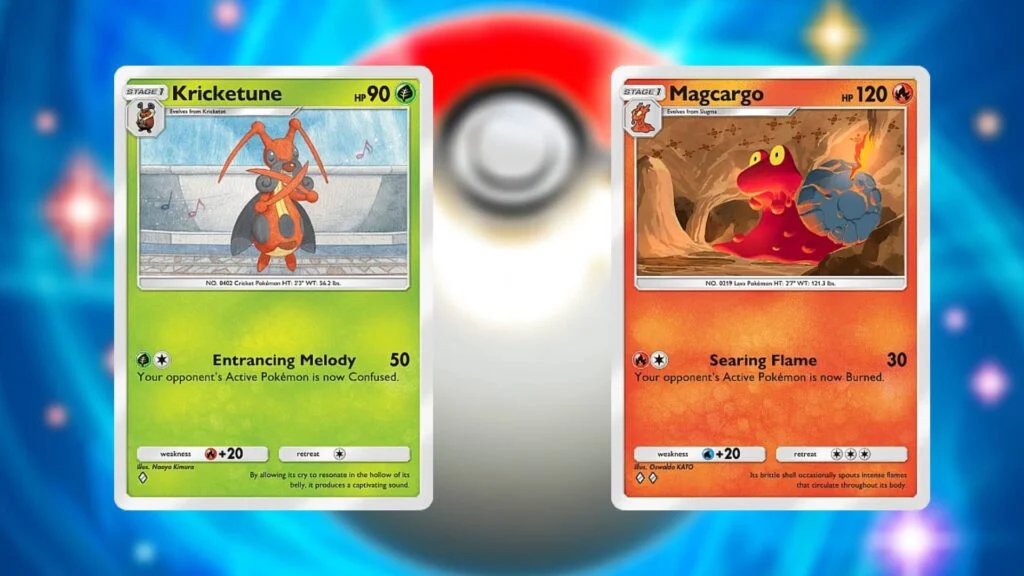
The demographic is not who you think. It spans nostalgic adults in their thirties and forties who collected as children and returned to the market when they realised what their collections might now be worth. It includes serious investors treating graded cards as alternative assets in the same way they might treat art or wine: uncorrelated to the stock market, scarce by nature, and liquid enough to sell at short notice. And it includes younger players who engage with the game itself, building competitive decks for organised regional and global tournament circuits. These are three almost entirely distinct audiences sharing a product, with almost nothing else in common.
The politics are intricate. The relationship between The Pokémon Company International and licensed distributors, between distributors and retailers, between retailers and the secondary market, is a web of agreements, exclusivities, and tensions that most people outside the industry never see. A new product launch can reprice the entire secondary market in forty-eight hours. A print-run decision made in Japan can affect the economics of a small business in Nova Scotia.
I knew none of this before we started. I know quite a lot of it now.
Start-ups are where you learn fastest
Most of the industries above arrived through established businesses: companies with existing playbooks, known competitors, and stable customer relationships. Start-ups are different.
A start-up is a company discovering what it is in real time, and when you are building with them, you are discovering it alongside them. The briefings are less polished. The understanding of the customer is less settled. The product changes between the first conversation and the launch. You are not designing for a known audience in a known market. You are helping define both.
In the Pokémon context, this meant building a brand and a product for a market that was moving under us. The grading market was expanding. The authentication technology was evolving. The audience's sophistication was growing. Every design decision was being made against a backdrop of incomplete information, and the only way to make good decisions in those conditions is to understand the industry well enough to have good instincts when the data is not there yet.
The year of immersion was not incidental to the work. It was the work.
Why the depth matters
The practical case for going deep is simple: you cannot design effectively for an audience you do not understand. Copy that uses the wrong terminology signals an outsider immediately. Visual choices that contradict the industry's established aesthetic language create friction that the audience feels but cannot name. A structure that misunderstands how the audience makes decisions produces a product that looks right and does not work.
But there is something beyond the practical. There is the genuine pleasure of learning something you did not expect to find interesting and discovering that it is fascinating. Real estate finance turns out to be a surprisingly rich subject. Medical device regulatory pathways are complex, consequential, and almost entirely invisible to the people who benefit from the devices they govern. And Pokémon, which I had filed as a children's property before this year, turns out to be a billion-dollar global market with its own investment logic, its own community structures, and its own forty-year history that rewards sustained attention in a way that very few industries do.
Every client takes you somewhere. The best clients take you somewhere you would not have found on your own.
That is, I think, the best part of the job.